
Focus on Phobos
Hayden Dalton | October 25, 2026

A Japanese spacecraft is on its way to Mars, aiming to do what no mission has done before: collect a piece of one of the planet’s moons and bring it back to Earth.
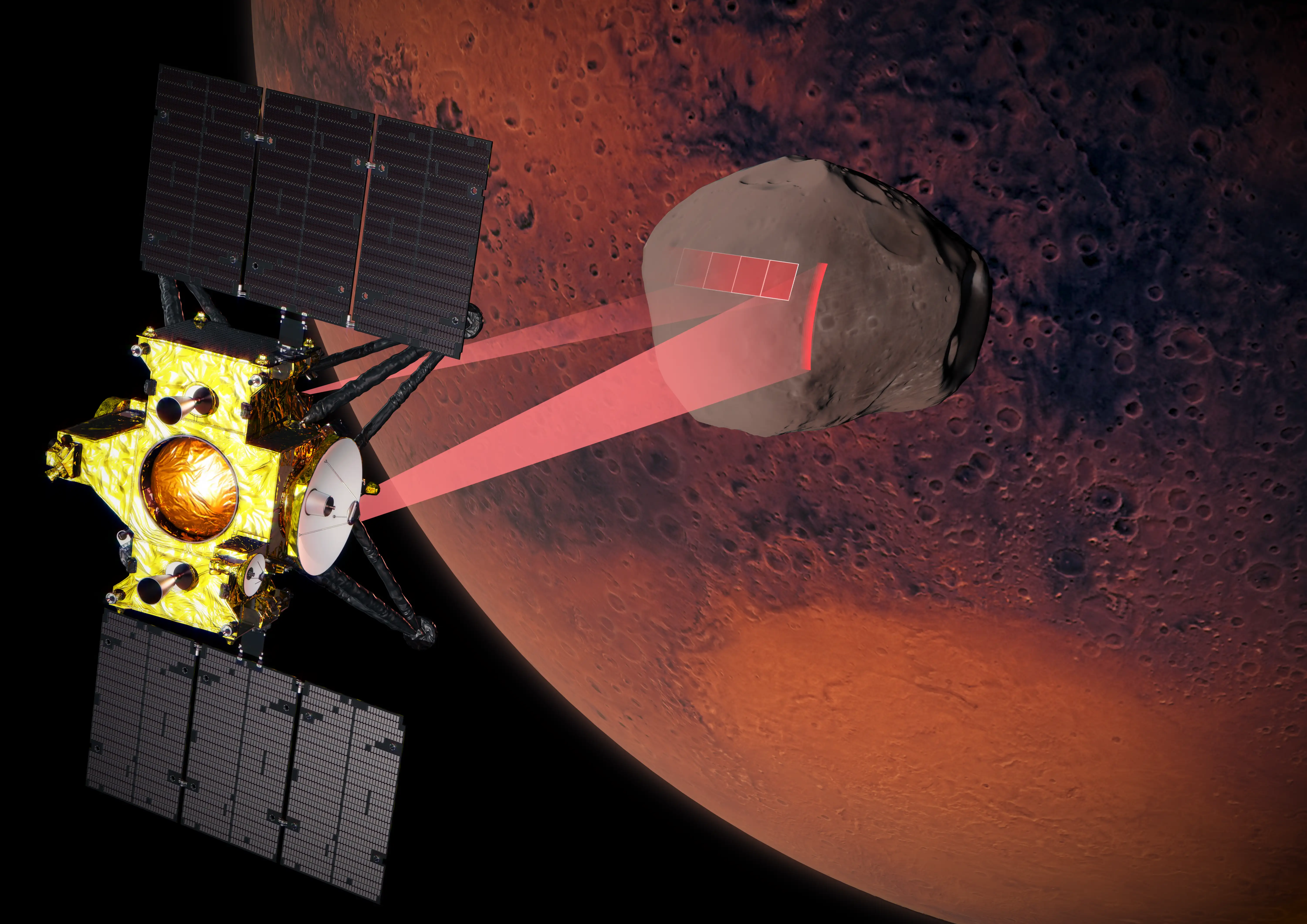
Launched from the Tanegashima Space Center on 20 October 2026, the Martian Moons eXploration (MMX) mission led by the Japan Aerospace eXploration Agency (JAXA), is bound for Phobos, the larger of Mars’s two moons.
It’s humanity’s first sample return mission to the Martian system, and the first to land on the moon of another planet in our solar system and bring a small piece of it back to Earth.
In about three years, the spacecraft will land on Phobos, drill into its surface and collect around 10 grams of rock and dust, roughly a teaspoonful.
It will then lift off and head back towards Earth.
As it approaches, it will release a small capsule that will plunge through our atmosphere and land via parachute in the South Australian outback at Woomera, in a joint effort between Japanese and Australian scientists and government agencies.
Once back on Earth, the sample of Phobos’s surface rock and dust, known as regolith, will be shared with laboratories around the world. Scientists hope it will reveal unprecedented new details about Phobos, Mars and the origin of our Solar System.
The regolith collected from Phobos is incredibly valuable for our understanding of how rocky planets, and life on Earth, began.
That’s because it will reach scientists completely untouched by Earth’s atmosphere, water and surface processes.
Ancient origins
One of the MMX mission’s goals is to reveal the origin of Phobos, a small, oddly shaped moon – nicknamed the ‘space potato’ – that circles Mars in a tight orbit.
This will help to broaden our understanding of planetary system formation. For example, these samples may tell us if Phobos is a trapped asteroid or leftover rubble from a giant planetary crash.
The rocks act like a time capsule, showing us exactly how the building blocks of planets, including water, moved around when our Solar System was young.
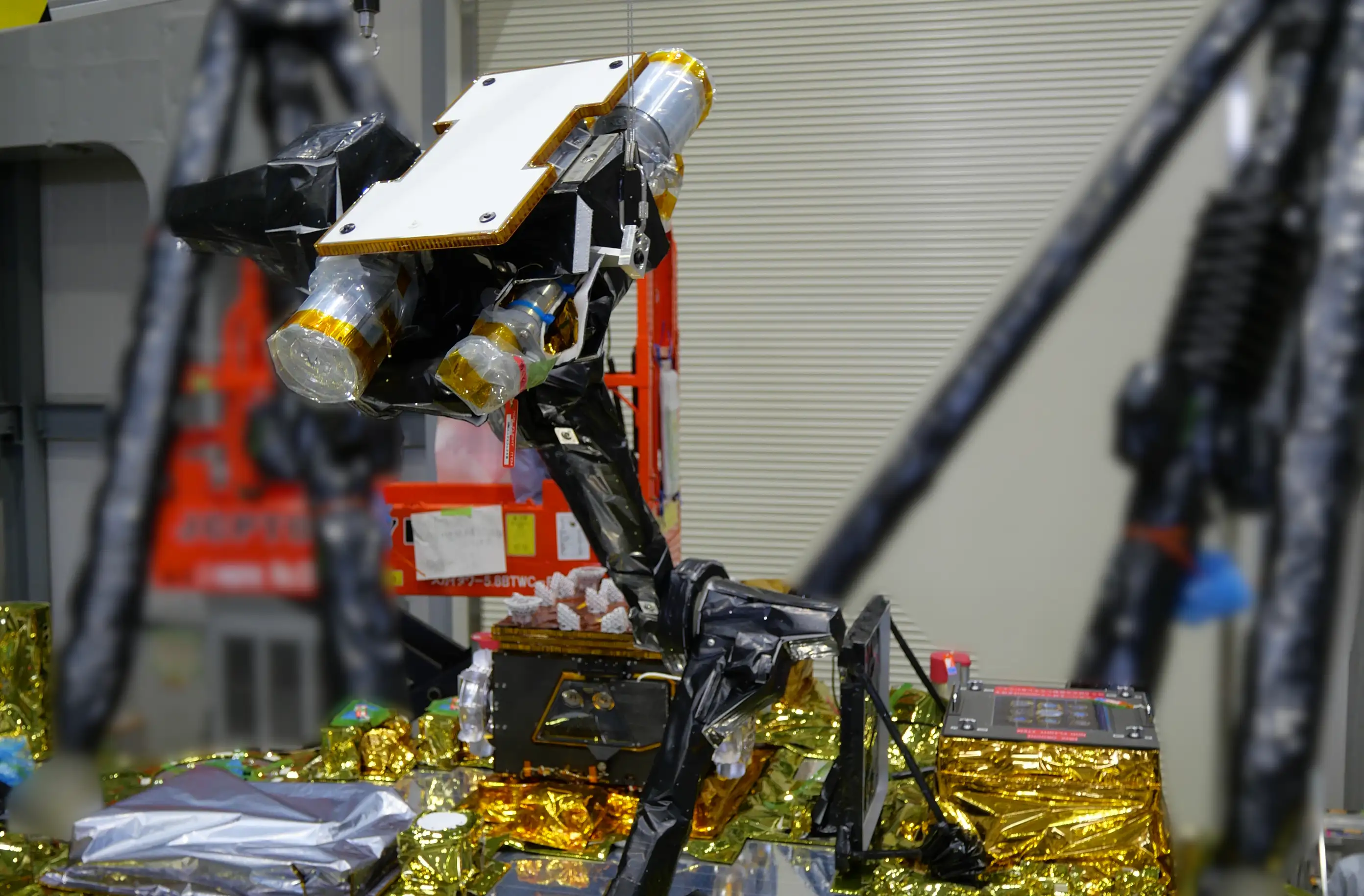
These rare Martian samples will also help with another of the mission’s goals, to better understand the surface of Mars itself.
We are pushing space exploration ever closer to human space travel and habitation on the Moon, Mars and beyond, and this mission is a significant step of that voyage.
To live on other moons and planets, we first need to understand what they’re made of, so we know what conditions to expect and what resources will be available.
Scientific advance
The technology to collect the samples and bring them back to Earth is already on board the spacecraft. But what we do with the samples once they get here is still a work in progress.
We already have the instruments and techniques that can analyse the microscopic samples from Phobos sitting in laboratories around the world, including here in the Melbourne Analytical Geochemistry Laboratory at the University of Melbourne.
But because space travel takes so much time, we’ve got five years to sharpen these tools even further.
One of our biggest challenges will be spotting the tiny fragments of Mars hidden in the moon sample.
Space agencies and universities around the world are working together to improve how we analyse these precious samples once they’re back on Earth, without contaminating them.
Melbourne’s space research
The University of Melbourne has a long history of space research.
In the 1970s, Professor John Lovering undertook groundbreaking analysis of Apollo 11 and 12 lunar samples, revealing a new type of mineral called tranquillityite.
More recently, the Melbourne Space Lab launched the first Australian-built satellite carrying a foreign payload.
For our team at the Melbourne Isotope Analytics Research Platform, the MMX launch is especially exciting.
We specialise in measuring the chemical make-up of materials with extreme precision, including working out how old they are, and that includes rocks from space.
Although the Phobos samples won’t arrive until 2031, we’re already working directly with JAXA and the University of Tokyo to develop the techniques we’ll use to prepare and analyse them.
This partnership is also helping to train the next generation of space sample scientists through a Collaborative PhD Program.
In July, our five collaborative PhD students experienced a first-of-its-kind Space Curation Camp at JAXA’s Institute of Space and Astronautical Science (ISAS) in Japan.
This world-first program gives our students hands-on training with JAXA’s instruments and specialists. By the time MMX returns, they’ll have finished their PhDs and will be ready to help analyse the samples.
Few things capture our imagination quite like space exploration, which is why the University of Melbourne has joined JAXA’s International Partnership for Outreach to share the MMX mission’s story.
The launch is just the first of many milestones for MMX.
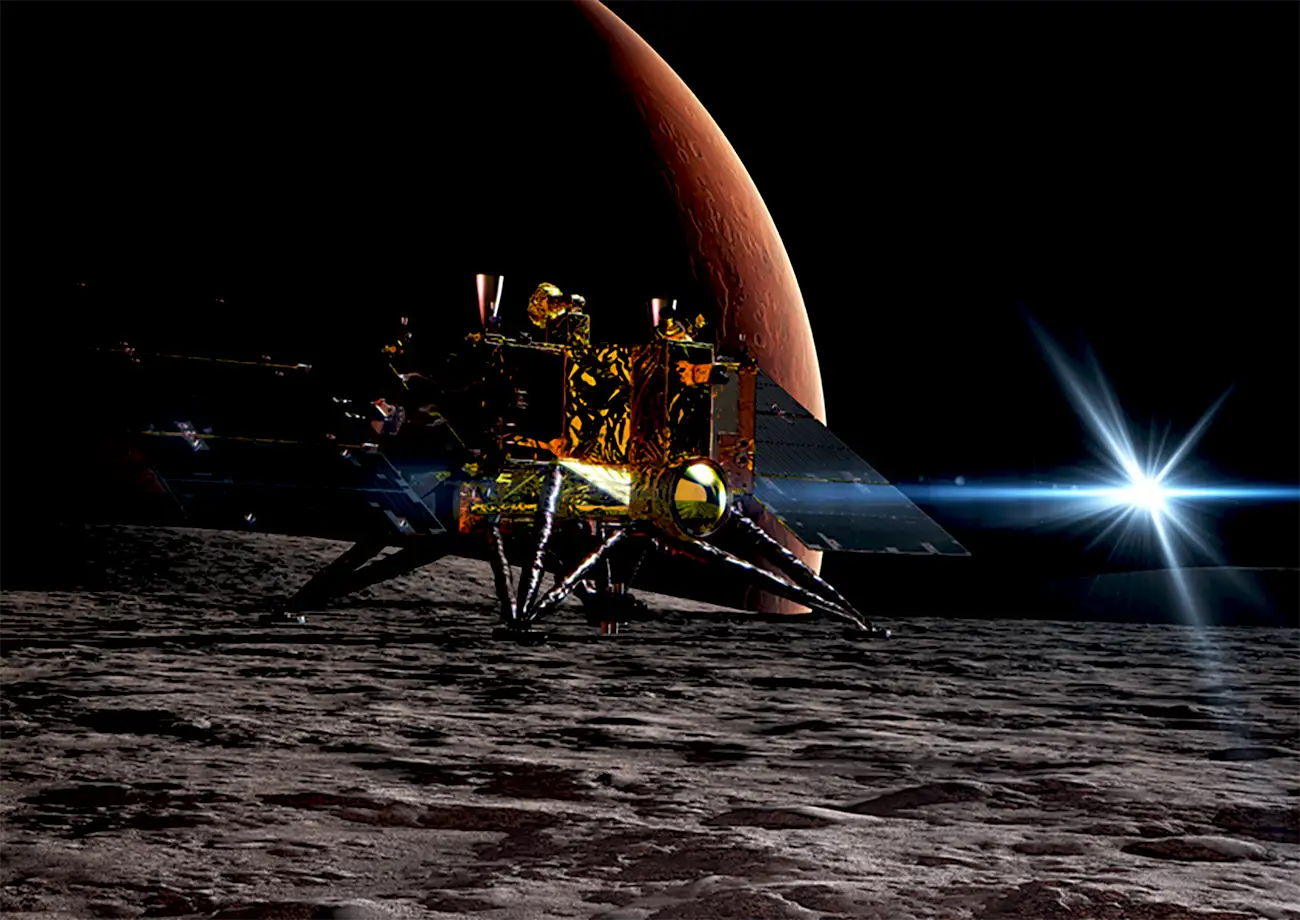
Over the next seven years, we’ll follow the spacecraft to Mars and back, and then see what its samples reveal once they safely reach the lab.
By working together across countries and institutions, we can reach further into the cosmos and, sometimes, bring a little of it back to Earth.
This article was written by Brandon Mahan and Hayden Dalton of the University of Melbourne. The University is a member of an International Partnership for research with JAXA, University of Bern, Australian Space Agency (ASA), UK Science Museum, National Astronomical Research Institute of Thailand (NARIT) and the International Astronomical Union (IAU). It was published by Pursuit.
SHARE WITH:

Hayden Dalton is a Lecturer in Geoscience at the University of Melbourne whose research explores the history of volcanic eruptions on Earth.