
Shall I compare thee to a wombat?

A new review by Western Sydney University PhD candidate Cassandra L. Jol, Associate Professor Hayley J. Stannard and Associate Professor Julie M. Old summarises what we know about adaptive immunity in marsupials and why these matters are important for wildlife ecology and disease management.
Published in the Journal of Experimental Zoology Part A: Ecological and Integrative Physiology, the review challenges the once-common assumption that marsupial immunity is simply a primitive version of the immune system found in placental (eutherian) mammals. Despite the divergence of marsupials and eutherians around 125–160 million years ago, both groups evolved complex defences capable of recognising specific threats and remembering them.
The immune system works through two closely connected branches- innate and adaptive immunity. Innate immunity performs as the body’s first line of defence including physical barriers like skin and chemical barriers such as mucus). Innate immune responses develop quickly and act broadly while adaptive immunity take longer to build with and produce a highly specific and targeted reaction.
Adaptive immunity is defined by specialised T and B cells. Specialised T cells coordinate cell-mediated responses, while B cells produce antibodies that recognise antigens and mediate humoral responses. Some of these cells remain after an infection, creating immunological memory that can support a faster response when an animal is exposed to the same threat again.
From womb to pouch
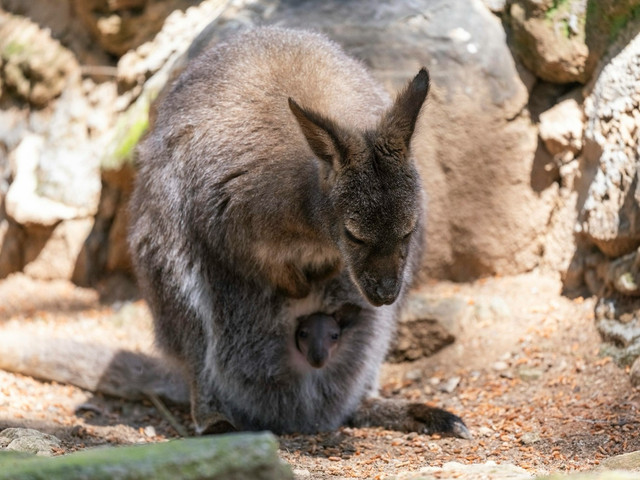
Marsupials enter the world at an exceptionally early stage of development. Their immune tissues are still immature at birth and develop rapidly during pouch life. While this happens, young marsupials grow in an environment rich with pathogens. Protection from their mother is subsequently crucial. This is delivered through a mother’s milk which delivers immune factors that help defend pouch young until their own immune systems develop.
Familiar machinery with some “koala-ty” twists

Many of the essentials for adaptive immune responses are shared across mammals. Marsupials possess T cells, B cells, antibodies and the molecular machinery required for targeted immune responses. However, the review highlights several evolutionary differences. Marsupial genomes appear to lack immunoglobulin D, or IgD, an antibody class found in eutherian mammals.
Marsupials also possess an additional T-cell receptor, adding another distinctive feature to their immune toolkit. These differences do not make marsupial immunity inferior; instead, they show how two mammalian lineages have developed variations on a highly effective defence system.
The possum-bilities for marsupial vaccinology
Understanding these systems has practical consequences. The authors examine how marsupial immune responses are involved in diseases including Tasmanian Devil facial tumour disease, tuberculosis in possums and sarcoptic mange in wombats, and how innate and adaptive defences work together. This evidence can help researchers identify why some animals can resist infection, why others develop severe disease and which immune responses a vaccine may need to stimulate.
Vaccination is becoming an increasingly important tool in marsupial disease management, but effective vaccines depend on a detailed understanding of how each species recognises pathogens, produces antibodies and forms immunological memory. The review draws together current vaccine research while clearly identifying that major knowledge gaps remain across this diverse mammalian group.
The (Tasmanian) devil is in the details
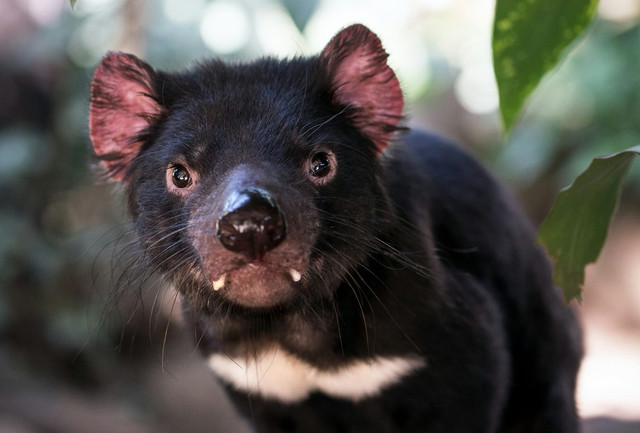
For threatened marsupials such as koalas and Tasmanian devils, disease can compound pressures such as habitat loss and climate change. Understanding adaptive immunity better will improve disease surveillance, guide vaccine development and strengthen conservation programs.
Expanding research across more marsupial species is therefore essential to help prevent disease-driven extinctions as well as understand this extraordinary branch of mammalian evolution.
This article was written by PhD candidate Cassandra L. Jol, Associate Professor Hayley J. Stannard and Associate Professor Julie M. Old of Western Sydney University.

Cassandra Jol is a PhD candidate at Western Sydney University focusing on marsupial immunology and genetics with an interest in bare-nosed wombats with sarcoptic mange. She holds a Bachelor of Science from the University of Sydney where she majored in Genetics and graduated with Class I honours.