The homes are decided – Getting them built is another matter

Two years into the plan to build 1.2 million homes by June 2029, 355,817 are finished, against 480,000 required. The council responsible for the plan now expects about 980,000 inside the period and the full number at the end of 2030. The usual response is more money and more land.
Neither will close the gap.
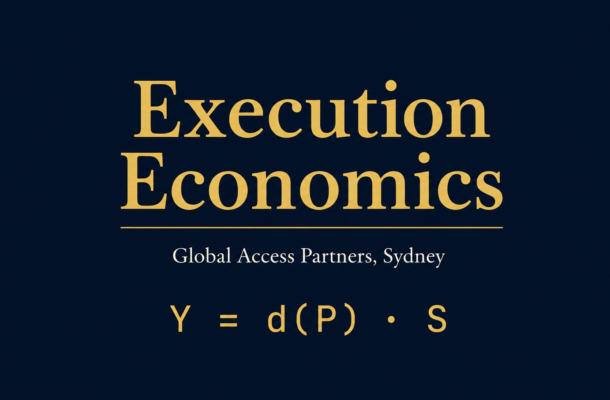
Execution Economics
Execution Economics starts from a simple observation. Deciding to build a house creates a possible house. Whether it becomes real depends on what happens to the decision on its way to the site. We read four things from the record: whether those who made the decision had the say, whether they could direct the work and change course, whether they knew what was coming in time to act, and whether someone outside the decision would stop it. Money answers none of these.
Read this way, the plan is six decisions in a line: setting the target, releasing land, servicing it with pipes, roads and connections, consenting each project, building, and choosing what kind of dwelling gets built. A home that clears five and fails the sixth is not built. The weakest link is servicing. That decision is spread across utilities, transport agencies and treasuries, and the government that released the land holds none of it.
Releasing more land adds to the front of the queue without widening the passage.
Record Queues
The queue is already a record. At the end of June 2026, 248,733 dwellings were under construction, more than five quarters of work at the current pace. In a congested system, more work entering slows everything already inside. And the system is made of people. The residential trades are short by about 83,000 workers, and builders are losing tradespeople to infrastructure, energy and data-centre projects offering longer contracts. Within the plan’s period, skilled hours are close to fixed.
That makes the size of each home a question of supply. The average new house is about 230 square metres, some 43 per cent larger than in the mid-1980s, while households keep getting smaller. By 2046 more than a quarter of households will be one person. The trade hours that build one large house build between a quarter and a half more terraces, townhouses or small apartments. Built in established suburbs that already have pipes, roads and schools, they bypass the servicing bottleneck.
The system builds big for a reason. The large builder buys land with approval risk settled and carries delay on its balance sheet. The local builder of eight townhouses usually needs a variation someone else grants, cannot see where its application sits, and is ended, not delayed, by a single appeal. The pull toward large projects and large houses comes from how consent is arranged, not from the tastes of developers.
Interest Rates
This year’s four cash rate rises sharpen the problem. They remove buyers but leave the trades as scarce as before, so new homes keep getting dearer while the builder least able to wait leaves first. The housing target and the cash rate now act on the same system in opposite directions, and nobody is charged with reading one against the other.
On the record, 1.2 million homes by June 2029 is out of reach. It would need about 78,000 completions a quarter from mid-2027, against 47,000 now, and every available lever combined reaches about 65,000. Pressing harder on a target beyond the system’s reach only lengthens the queue.
The better course is to keep the number and change the arrangements. Hold new greenfield release while the queue grows. Stage public works that compete for the same trades. Give one body in each state the servicing decision. Close third-party appeals on code-compliant townhouses and low-rise apartments, put a statutory clock on consent, and write planning codes so a mid-size project can proceed without exceptions. Pay the states on homes completed, with a share tied to the kind of dwelling households need. Then publish the new date and the path to it before the work begins.
None of this is money. Worked through, it delivers about one million homes by June 2029 and the full 1.2 million by mid-2030, half a year earlier than now expected, with far more of them the size, and in the places, that forming households need.

Peter Fritz AO is Chairman of Global Access Partners and Group Managing Director of TCG. He chairs a number of influential government and private enterprise boards and represented Australia on the OECD Small and Medium Size Enterprise Committee.