


On global warming, public policy is where the science was in 1998. Due to new evidence, science has since moved off in a different direction.
The UN science body on this matter, the IPCC, is a political body composed mainly of bureaucrats. So far it has resisted acknowledging the new evidence. But as Lord Keynes famously asked, "When the facts change, I change my mind. What do you do, sir?"
Four things have changed since 1998.
First, the new ice cores shows that in the six global warmings over the past half a million years, temperature rises and falls occurred on average 800 years before the accompanying rises and falls in atmospheric carbon. The carbon rises could not have either started or ended the temperature rises. So there must be natural influences on global temperatures that are more powerful than atmospheric carbon levels.
This 800 year lag became known and past dispute by 2003, which is significant. The old ice core data, collected from 1985 to 1998, was low resolution: the data points were more than a thousand years apart. It showed carbon and temperature moving in lockstep, and it was the only supporting evidence we ever had for the notion that carbon caused temperature. It seemed too good to be true-it appeared we could control the temperature of the plant just by adjusting the levels of a minor gas!
Watch Al Gore's movie carefully. The old ice core data is the only evidence he presents for believing that carbon emissions cause global warming. But by 2003 we had found the 800 year lag, so then we knew that temperature caused carbon, not the other way around as previously assumed. Al Gore's movie was made in 2005 so it was misleading of him not to mention the new ice core data. Would anyone have believed his pitch if he had mentioned that the alleged cause (rising and falling carbon levels) happened 800 years after the effect (rising and falling temperatures)?
Secondly, with the reversal of the ice core evidence, there is now no evidence that carbon emissions cause significant global warming. None.
Evidence is a set of observations by people of events. The scientific method demands evidence-theory, politics, and vested interests are all trumped by evidence. The scientific method evolved as our best method for obtaining reliable information, precisely because it was immune from forces such as power and superstition.
It is important to realize what is not evidence that carbon emissions cause global warming. There is ample evidence that global warming has occurred, but it says nothing about the causes of that warming. Serious theoretical calculations for the amount of warming by 2100 range from an inconsequential 0.24°C to a catastrophic 6.2°C, but theory (including computer models) is not evidence. Comparison of model outputs to observed results is not evidence, because it cannot prove that the model is always right, only that it was right in that instance. Existing computer models treat clouds simplistically and unrealistically, and omit the effects of cosmic rays on clouds, so we cannot begin to be confident that they might approximate reality.
Western governments have spent $50b on global warming since 1990, yet have found no evidence. We are constantly bombarded with evidence that the world has warmed. Don't you think we would have heard all about any evidence that carbon emissions cause global warming, if there was any?
Thirdly, the warming trend that started in 1975 ended in 2001. The global temperature has been flat since 2001, and has dipped sharply in the last few months. The warmest recent year was 1998. This is a very different picture from that presented by the IPCC in 2001, of overpowering warming due to carbon emissions for the foreseeable future. Obviously there is some other influence on global temperatures at work, more powerful than our carbon emissions. The IPCC are silent on what those causes might be (hint: probably something to do with clouds).
So why do some people say temperatures are still rising, apart form being out of date? Satellite data is the only temperature data we can trust, but it only goes back to 1979. The satellites go around 24/7, measuring the temperature across broad swathes of the world, everywhere except the poles. Three of the four world temperature records use satellite data partly or exclusively, and they all say that the world stopped warming in 2001 and that temperatures have recently dipped.
NASA GISS, the home of the global warming scare, only uses land based thermometers (and a few ocean thermometers)-despite being a space agency. Land thermometers are housed in little boxes a few feet off the ground. They were mainly put in place decades ago, on the outskirts of towns or cities so it was convenient to go and read the temperature each day. But urban growth has changed the microclimate around many of these thermometers, due to concrete, asphalt, vegetation changes, houses, air conditioners, and so on. In contrast to the satellite data, NASA GISS reports a continued warming trend since 2001. But their data is likely just measuring urban growth around some of their thermometers.
Fourthly, we looked for the greenhouse signature and could not find it. Each possible cause of global warming heats the atmosphere in a different pattern. Increased greenhouse warming causes a hotspot 10 km up over the tropics. The hotspot is central to our understanding: if there is no hotspot then either there is no significant increased greenhouse warming, or we don't understand greenhouse and all our climate models are rubbish anyway.
Decades of measurements with thermometers in weather balloons have been unable to find even a small hotspot. So we now know for sure that carbon emissions are not a significant cause of the recent global warming. I would switch back to being an alarmist if we had found a strong greenhouse signature. (By the way, our carbon emissions have no doubt caused some underlying warming, but not enough to create a hotspot that we have been able to detect so far.)
These four changes have rendered our current debate over carbon emissions obsolete. The changes occurred slowly as the science on each item became more settled, so there was no sudden news flash to make us sit up and take notice.
But now that we are finally coming to terms with how expensive it will be to cut back our carbon emissions, the causes of global warming have suddenly become a topic of major economic importance.
Policy makers must grapple with the possibility that global temperatures don't rise over the next decade, and that the recent rises were predominately not due to our carbon emissions. Deliberately wrecking the economy for reasons that later turn out to be bogus hardly seems like a recipe for electoral success.
Obviously the onus is on the Government to clearly set out the evidence for believing carbon emissions are the main cause of global warming before embarking on an ETS.
Dr David Evans is the rocket scientist who wrote the carbon accounting model (FullCAM) that measures Australia's compliance with the Kyoto Protocol, in the land use change and forestry sector. He devoted six years to carbon accounting, building models for the Australian Greenhouse Office. Dr Evans has a background in mathematics, computing, and electrical engineering. He also researches mathematics, in the areas of Fourier analysis, calculus, the number system, and multivariable polynomials.
____________________________
RELATED LINKS:
Comments
And by the way, the earth is indeed round...
As a mathematician Dr Evans familiar you should be well familiar with the challenges of proof. You should know scientific method is not based on proof – it’s based on very close approximations, which we refer to as theorems.
Let us then have a little look at your argument that there is no proof that global warming is caused by greenhouse gasses such as methane and carbon dioxide.
In the past dramatic changes in temperature producing coolings or warmings (ice ages and so forth), have been initially triggered by fluctuations in heat from the Sun, however in some epochs these relatively minor fluctuations triggered chain reactions which lead to increases in greenhouse gasses being released on the earth – exacerbating the temperature rises. If we look at the earth’s geological history the implication is not that carbon dioxide has triggered warming and cooling periods, but that it has exacerbated the effects triggered by changes in the Sun. No credible scientist has suggested that in the past carbon dioxide has been the trigger – but rather that it has been a dominant factor in the chain reaction which produces overall temperature rises or falls.
I’m not quite sure where you’re sourcing your data, but if we look at a number of studies taken in the 1980s (Chapman et. al., 1982, Fifield, 1988; Barnola et. al., 1987) a clear and consistent correlation has been shown between increased air temperature and increased levels of CO2. No significant lag was found, although it has to be said, we’re dealing with geological time – the temperature changes were significant – as were the increases in CO2 – but these changes triggered by the sun developed over hundreds and thousands of years.
The hard evidence you’re looking for is all around you, and happening right now.
Observe the most recent increase in CO2 levels since 1958 onwards and global temperature trends over the last 100 years.
Of course data from past ice ages does not PROVE the hypothesis that CO2 is a factor in global warming – but it strongly supports it - which shouldn’t be all that difficult a concept to grasp for a mathematician who claims to understand Fourier transforms.
In the past the sun heated the earth to a kind of tipping point where the level of carbon dioxide production was increased, causing atmospheric changes, which in turn increased the rate of warming.
At the moment we can’t blame the sun however, because the traditional correlation between changes in the Sun, and changes in the earth’s temperature has been broken, in fact many geologists suggest that the current CO2 outputs could even be preventing a period of cooling – but the long observed relationship between CO2 and warming is holding and should be of a serious concern to us all.
To put it all in simple language – this time around we are the trigger – not the sun.
And as you well know – as a mathematician – your strongest argument is not to call for proof but to provide a counter example and disprove the theorem. The ball’s in your court…
from one to another
David - thank you for a very interesting read and refreshing change of pace.
I won't pretend to know much about the whole climate change debate, because I don't, but what I do know is that sometimes a little myth-busting goes a long way. I believe carbon emissions are a problem, I also believe global warming exists, but as to how the two relate and to what extent, I am not entirely convinced. As for its ecomonic importance, again I don't have the expertise to comment, but it would seem that there are quite a number of issues facing Australians today that are of equal significance (maybe more to some?) that require a bit of extra attention also.
The hot-spot debate is a furphie
It appears that a mathematical glitch was identified in the processing of data from atmospheric temperature sensors. Attempts to resolve this glitch led to two opposite conclusions. One group worked out that the hotspot wasn't there. The other worked out that it was.
But in a way, the whole debate is a furphie. This is because the ‘hotspot’ is not a signature per se of CO2 induced global warming. It is a signature of global warming overall. And while people question that global warming overall is increasing the trend lines are indeed up and, regretfully, the poles and other places the melting.
Even if CO2 were not a major cause of global warming, we would still have a major problem with industrial emissions. The oceans - our vast seemingly limitless oceans - are becoming acidic. This threatens to destroy the shells of billions of micro-organisms at the bottom of the oceanic food chain.
Beyond that, industrial toxins are probably in everybody's bloodstream, there are (small) increases in cancer rates in young people, male sperm counts are down, and overall environmental statistics are worsening in conjunction with economic increase and population entries. In short, even without global warming we are doing ourselves in.
For the sake of present and future generations we need to commit ourselves to a whole system change to an ecologically sustainable and socially healthy society that is pleasurable to live in.
Here are links to responses to David Evans’ assertions.
An audio discussion presenting both sides:
Yours for a world that works,
Andrew Gaines
Alliance for Sustainable Wellbeing
Accelerating the transition to a viable society
(02) 4782-200
andrew.gaines@alliance-for-sustainable-wellbeing.com
In response to David Evans
Evans' case about the state of the atmosphere needs to be addressed by people of a contrary view to the alarmists and competent in the relevant science.
I am a skeptic about the changes spoken of on both sides and about the causes and effects spoken of. I know that in many cases good measurements are the basis of good science.
In my previous blog on Open Forum I have written that I do not know what is happening, for good or bad. But I do know for certain that we are pumping and have been pumping for centuries a new component into the atmosphere in vast tonnages, and big as the planet is, I entertain the deduction that we may induce thereby a tipping point which takes us into an irreversible change. It is reasonable, I would have thought, that we should beware.
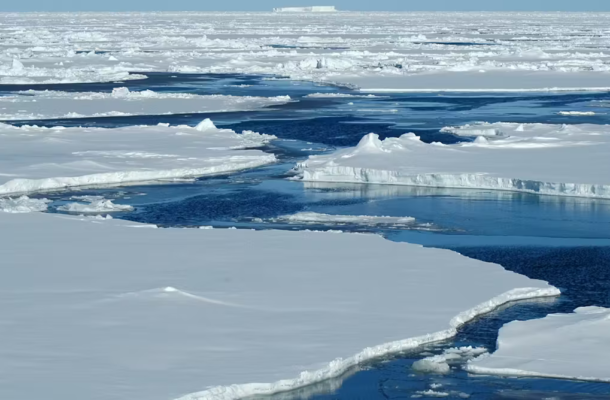
The explanations given for the melting of the Arctic ice due to the presence of CO2 are at least plausible and so are its consequences upon the Atlantic and the Gulf Stream and thus immediately upon the lives of all the communities of the Northern Hemisphere. What the alarmists are saying is, mildly at the least, plausible.
I have a son who for many years has gone there annually and spent at least five months a year at one or other of our bases in the Antarctic. He tells me that there are signs on the sea ice of melting down there, too. Not large and striking, but you notice them, sometimes starkly. I acknowledge the phenomenon of natural variability but we are entitled to and wise to look into these matters for causes and effects.
I don't like coal mining. I lived as a child in a coal mining community. I have long held land in the Hunter Valley. I know many men who work in the mines there. What you see there is, for me, awful to behold. Little or nothing is being done to fill them in. And I have seen the vast, long-abandoned open cut mines in the countryside of Pennsylvania where nothing at all has been done over many decades to make them good.
Look at the consequences for the workers in the mining communities, for the citizens of Beijing, of coal. Coal creates a mess, everywhere and without exception. There are better ways to treat a man than blackening him every day or than putting particularates in the lungs of people. On that account alone - aesthetics, the preservation of the countryside, the health of workers and citizens - we should turn now to a clean way to produce energy.
We should get out of coal and until there is a better idea, solar is quiet enough, clean enough, cheap enough and abundant enough to recommend itself to me even if there is no global warming due to the CO2 we are pumping into the atmosphere and the oceans (indirectly).
Dr Evans cooling Earth
I can only claim to have a scientific background and a keen interest in protecting our future. I recommend anyone who thinks the Earth has stopped warming to look at the article and graphs of Paul Lynas in New Statesman, January, where he plots 8 year graphs going back annually over decades and shows many 'plateaux'. Around 1990 you could 'prove' over 8 years that the Earth was cooling. Didn't last long. It's a great article, find it at: http://www.newstatesman.com/environment/2008/01/global-warming-lynas-climate